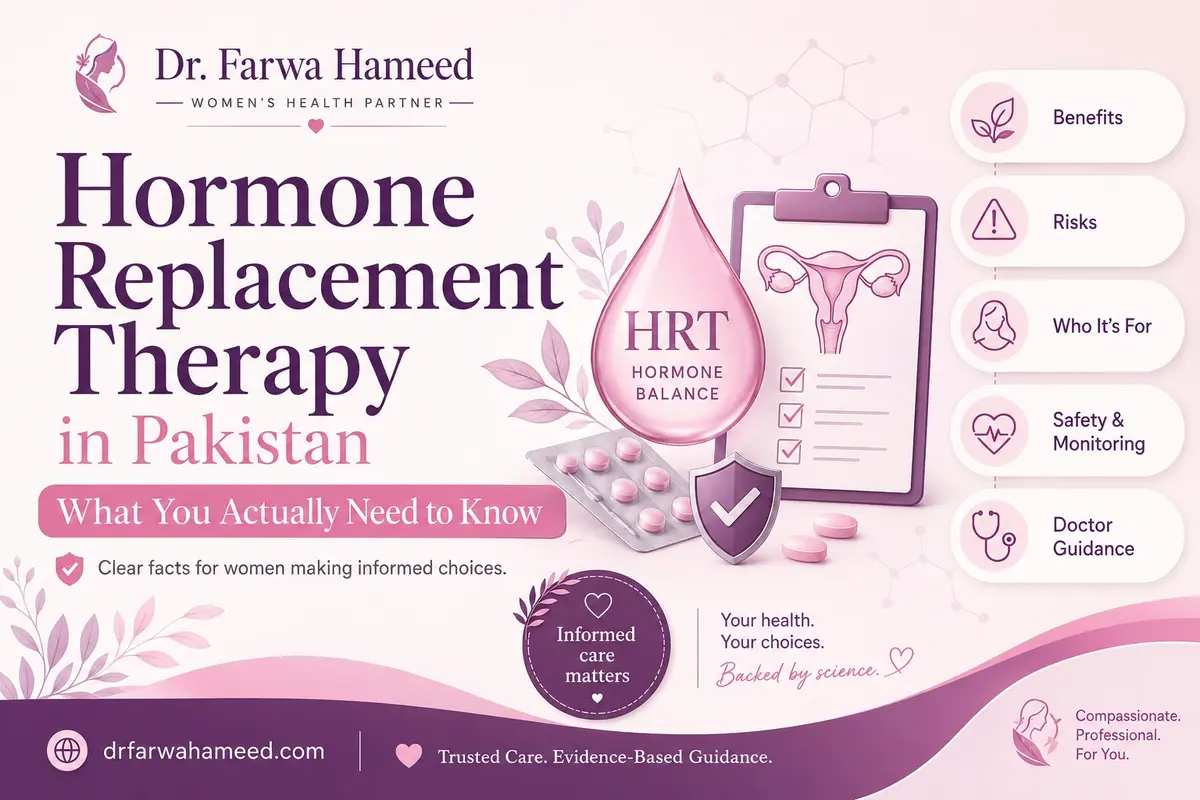
If you've been searching for straight answers about hormone replacement therapy in Pakistan, you've probably run into the same problem most women do: either vague information that doesn't apply to Pakistani women specifically, or content so alarming it makes HRT sound like a last resort.
Neither is helpful.
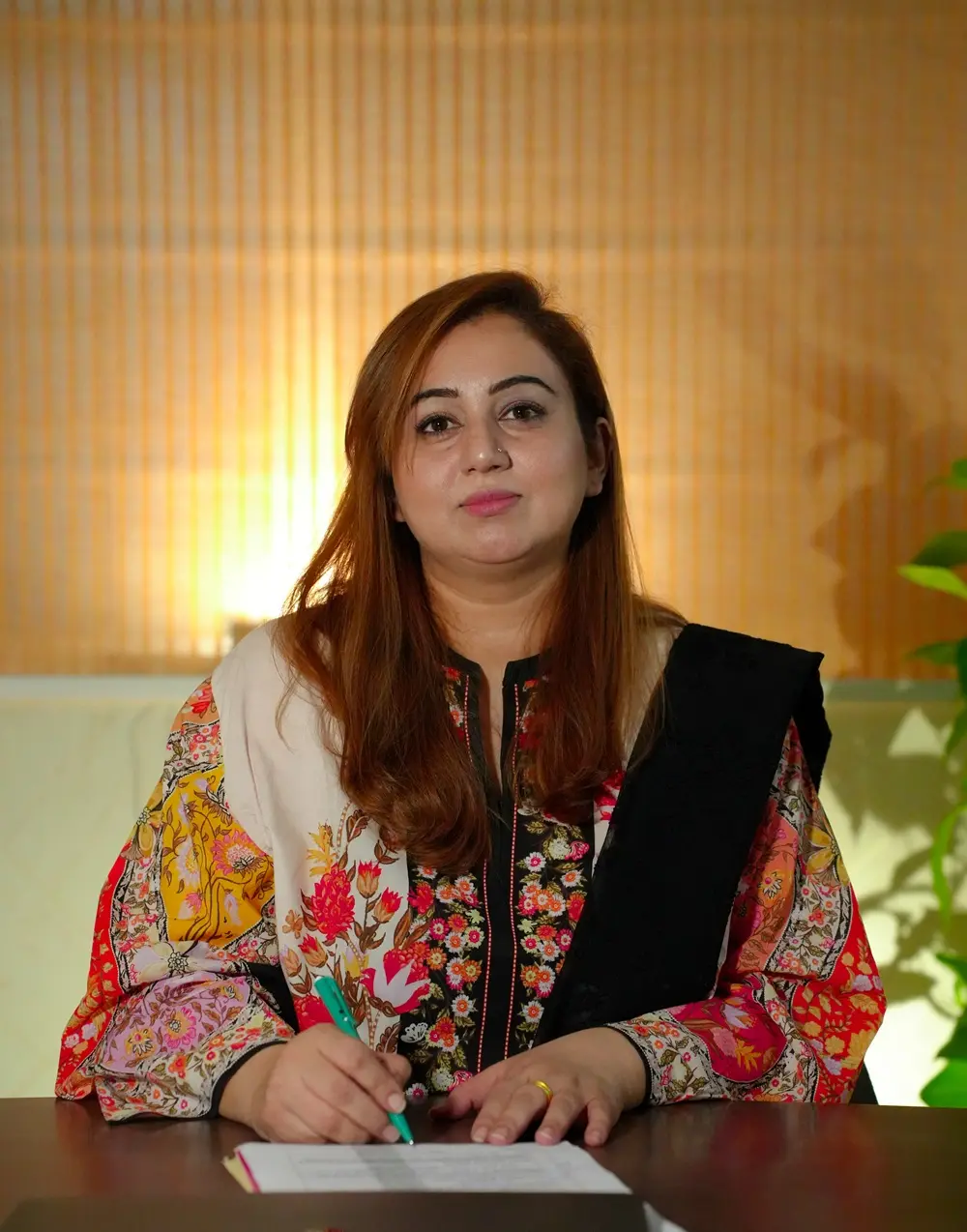
This guide covers what HRT is, who it's actually for, what's available here, and the real tradeoffs. No unnecessary alarm. No glossing over the concerns either. If you want to discuss your symptoms with someone before reading further, Dr. Farwa Hameed is a best gynecologist in Islamabad who sees women at every stage of the menopause transition.
Need help choosing the right gynecologist?
If your concern is pregnancy, PCOS, fertility, irregular periods, or menopause, choosing a gynecologist with the right experience can make your consultation more useful.
Ask About Appointment AvailabilityWhat Is HRT and Who Needs It?
Hormone replacement therapy means supplementing hormones your body has stopped producing in adequate amounts. For most women, this happens during perimenopause and menopause, when estrogen and progesterone levels drop.
The symptoms from this drop vary a lot from woman to woman. Some women barely notice the transition. Others deal with hot flashes severe enough to disrupt sleep every night, mood changes that feel nothing like themselves, vaginal dryness that makes sex painful, and cognitive fog they can't shake. Joint pain, anxiety, and sudden fatigue are also common but less talked about.
HRT works by replacing those missing hormones, reducing or eliminating most of these symptoms for the majority of women who use it.
Women who typically benefit most from HRT:
- Women in perimenopause (the transition period before periods stop) with significant symptoms
- Women who have gone through early menopause, either naturally or due to surgery
- Women with premature ovarian insufficiency (POI), where ovaries stop working before age 40
- Women with severe menopause symptoms that are affecting daily life, sleep, or relationships
If your symptoms are mild and manageable, HRT may not be necessary. If they're affecting your quality of life, it's worth a proper consultation. For a full picture of what perimenopause and menopause can look like, the menopause symptoms and treatment options covers the most common presentations in detail.
Types of HRT Available in Pakistan
Access to different HRT formulations in Pakistan is more limited than in the UK or US, but there are real options available.
Oral HRT tablets are the most commonly prescribed form here. These include combined estrogen-progesterone pills for women with a uterus, and estrogen-only tablets for women who have had a hysterectomy. Brands like Femoston and Premarin are generally accessible through pharmacies in major cities, though availability varies.
Transdermal options (patches, gels, and sprays) are available in Pakistan but harder to find than tablets. Transdermal delivery bypasses the liver, which is relevant for women with certain health conditions or those at higher clotting risk. These formulations are worth asking about specifically if they interest you.
Vaginal estrogen is a local treatment for urogenital symptoms: dryness, discomfort, and recurrent UTIs. It delivers estrogen directly to the tissue that needs it with minimal absorption into the bloodstream. This is often prescribed independently or alongside systemic HRT.
Testosterone is sometimes used in very low doses for women experiencing significant loss of libido during or after menopause. It's not routinely available but can be prescribed by specialists.
One practical point: the formulation matters. Micronised progesterone (body-identical progesterone) carries a different risk profile than synthetic progestogens, and where possible it's worth understanding what type of progesterone is in whatever you're prescribed. Ask your doctor directly. If you're based in the capital and want to go through the options in person, you can find full details on the women's health services in Islamabad.
Benefits vs Side Effects: An Honest Breakdown
What HRT Does Well
For women with moderate to severe menopause symptoms, the evidence is fairly strong. Hot flashes and night sweats typically reduce significantly within weeks. Sleep improves, partly because the flashes aren't waking you, and partly due to direct effects of estrogen on sleep regulation. Many women notice mood stabilisation, better concentration, and more energy.
Vaginal and urinary symptoms respond particularly well, and this is an area where many Pakistani women suffer silently because it feels too personal to raise with a doctor.
HRT also protects bone density. Menopause accelerates bone loss, and estrogen is one of the most effective ways to slow that process. For women at higher risk of osteoporosis, this is a clinically meaningful benefit.
Some evidence suggests cardiovascular benefit if HRT is started early in menopause, though this picture is complicated and depends on timing, formulation, and individual health factors.
The Real Risks
The 2002 Women's Health Initiative study caused widespread concern about HRT, linking it to increased breast cancer and heart disease risk. What matters is the context: that study used older formulations at doses not commonly used now, in women who were on average 63 years old, more than a decade past menopause. Current guidance looks quite different.
For women under 60 who start HRT within 10 years of menopause, the risk picture is far more favourable. The breast cancer risk associated with combined HRT (estrogen plus progestogen) is real but modest, roughly comparable to the increased risk from drinking one to two units of alcohol daily, or being overweight. Estrogen-only HRT carries little to no increase in breast cancer risk.
Blood clotting risk is slightly elevated with oral tablets but much less so with transdermal options.
The key: these are population-level statistics. Your individual risk depends on your health history, your family history, when you start, what formulation you use, and how long you continue. This is exactly why a proper consultation matters rather than a blanket yes or no. For a structured look at what a menopause consultation covers, the menopause care walks through the approach in more detail.
Side effects in the first few weeks can include breast tenderness, bloating, and irregular spotting. These usually settle.
Who Should Avoid HRT
HRT is not appropriate for everyone. Women who should avoid it or discuss it very carefully with a specialist include:
- Women with a current or recent history of breast cancer, or a strong family history that significantly elevates personal risk
- Women with a history of endometrial cancer (uterine cancer)
- Women with undiagnosed vaginal bleeding
- Women with a personal history of blood clots (DVT or pulmonary embolism), though this depends partly on formulation
- Women with active liver disease
- Women who are pregnant
If you have controlled hypertension, diabetes, or migraines, HRT is not automatically off the table but needs careful assessment.
Vaginal estrogen is generally considered safe for most women, including many who cannot use systemic HRT, because the hormonal absorption into the bloodstream is very low.
Cost of HRT in Pakistan
Prices vary depending on the formulation, brand, and where you purchase. As a rough guide:
Oral HRT tablets (such as Femoston) typically run between Rs. 1,500 and Rs. 3,500 per month's supply, depending on dose and pharmacy location. Imported or branded versions sit at the higher end.
Vaginal estrogen preparations (creams or pessaries) are generally in the Rs. 800 to Rs. 2,000 range for a month's use.
Transdermal patches or gels are harder to find locally and may need to be sourced through specialty pharmacies, sometimes at higher cost.
The consultation itself is separate. Seeing a gynaecologist or menopause specialist in Islamabad or Rawalpindi typically costs between Rs. 2,000 and Rs. 5,000 for a private appointment.
These are approximate figures and do change. It's worth confirming current pricing with your pharmacist directly.
Dr. Farwa's Approach to Menopause and HRT
A lot of women arrive at a menopause appointment having already spent months, sometimes years, managing symptoms on their own. They've tried supplements, pushed through the fatigue, kept the night sweats quiet. By the time they ask for help, they're exhausted.
Dr. Farwa Hameed approaches menopause consultations without assuming that treatment is always the answer, or that it never is. The goal is to understand your full picture: your symptoms, your cycle history, your risk factors, your concerns about treatment, and what actually matters to you in terms of your daily life and health.
HRT is discussed where it's appropriate and explained honestly where it isn't. That includes being clear about what we know, what the evidence says, and where there's still genuine uncertainty. Pakistani women are also not a monolith: a woman in early perimenopause with joint pain and sleep disruption has different needs from someone five years post-menopause dealing primarily with urogenital symptoms.
For women who prefer not to use hormones, or for whom HRT isn't suitable, there are evidence-based non-hormonal options worth discussing too.
If you're ready to have that conversation, book a consultation and we'll go through everything properly.
Dr. Farwa Hameed is a women's health specialist based in Islamabad. This article is for general information and does not replace an individual medical consultation.