
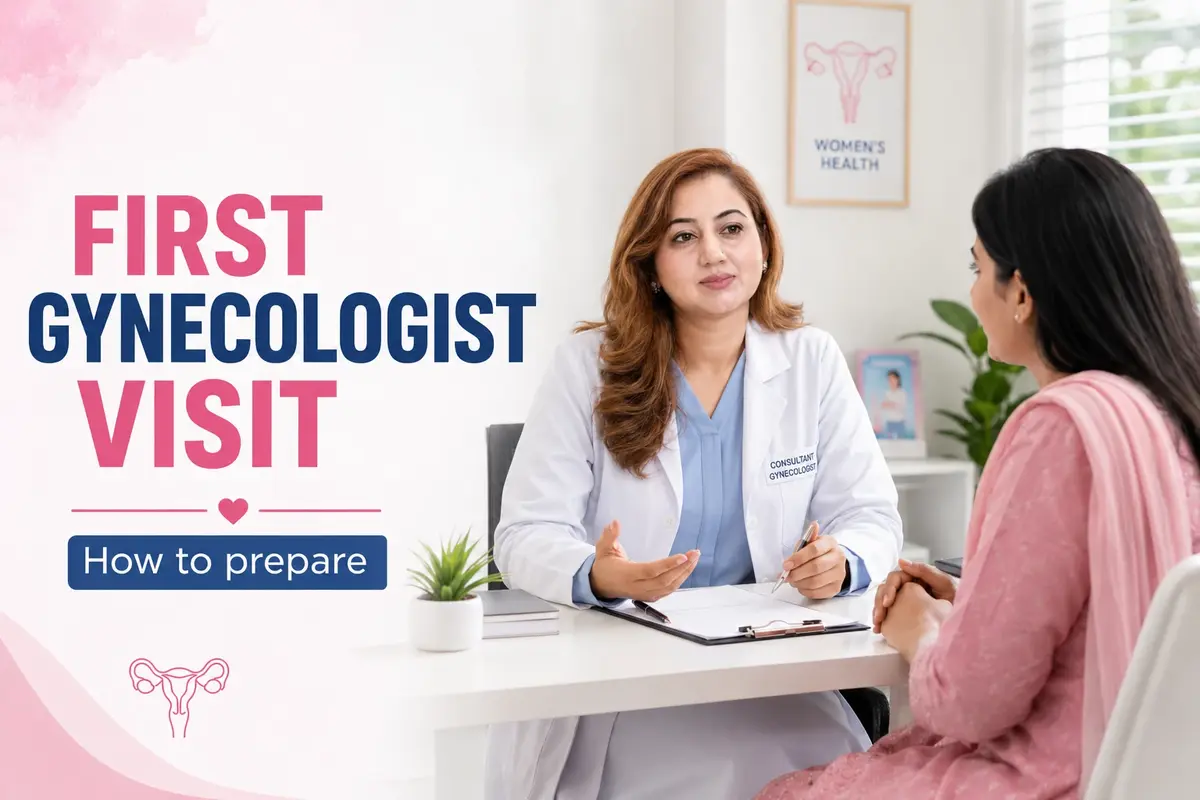
Many women put off their first gynecologist appointment for months, sometimes longer. Not because something is seriously wrong, but because they are not sure what to expect. The unknown is uncomfortable. You might wonder what the doctor will ask, whether you will need an exam, or whether your concerns are even worth mentioning out loud.
They are worth mentioning. That is the whole point of coming in.
Dr. Farwa Hameed sees this pattern often: women who arrive apologetic, half-convinced their symptoms are not serious enough to have bothered with an appointment. The short answer is that they are. Your first visit is mostly a conversation, and knowing what that conversation looks like makes it a lot less daunting.
What Happens at a First Gynecology Appointment
The first thing to know is that a first visit involves more talking than anything else. The doctor will ask about your menstrual cycle: how regular it is, whether it is painful, how heavy your flow tends to be. She will ask about your general health history, any medications you take, and what specifically brought you in.
A physical exam does not always happen at a first visit. Whether one is recommended depends on your age, your symptoms, and what you have come in to discuss. If you are young with no active complaints, the appointment may be entirely conversational.
That said, if a test or exam is suggested, the doctor or her staff will explain it before it happens. You are allowed to ask what it is for. "What are you checking for?" is a completely reasonable question, and a good doctor will answer it plainly.
Clinic, Hospital, or Online: Which Option Fits Your Situation
Where you go matters more than people tend to think.
A clinic visit is the right choice for most first appointments. It is more personal, the wait tends to be shorter, and the setting is suited to straightforward concerns like irregular periods, discharge, or birth control questions. If you are dealing with PCOS symptoms, weight changes, acne, or hormonal irregularities, a clinic appointment with a doctor who manages these conditions specifically is where to start. Dr. Farwa's PCOS treatment in Islamabad page explains what that kind of evaluation involves, so you know what to expect if those issues come up.
A hospital setting makes more sense when your symptoms suggest something that might need imaging, blood work, or a specialist on the same day. Severe pelvic pain, a suspected cyst, or complications in early pregnancy are the kinds of things that benefit from having resources in the same building.
Online consultations have one clear limitation: the doctor cannot examine you. They can review your history, answer questions, and point you in the right direction. But physical assessment is not possible through a screen. Use a virtual visit for a follow-up question or a second opinion, not as a substitute for an in-person first exam.
What to Bring
Keep this list on your phone so you do not have to think about it on the day:
- Your CNIC or appointment confirmation
- A rough note of your symptoms: when they started, how often they occur, how severe
- The dates of your last two or three periods, even if approximate
- Any previous reports: ultrasounds, blood tests, scans
- The names of medicines you currently take, including any supplements
- Your questions, written down
That last point is easy to skip and easy to regret. Doctors move fast. If there is something you are embarrassed to bring up verbally, write it down anyway. Handing over a note is easier than working up the nerve to say something in the moment, and anything you have written down is less likely to slip your mind when you are sitting in the room.
How to Prepare Before the Visit
If irregular or painful periods are the reason you are going in, the most useful preparation you can do is track your last few cycles before the appointment. Exact dates are not required. A rough note in your phone calendar is enough to give the doctor something concrete to work with.
Wear something comfortable and easy to change out of. If the clinic has sent you specific instructions before the appointment, follow them. Otherwise, no special preparation is needed.
If you are thinking about getting pregnant and want to understand what proper antenatal care involves from the start, Dr. Farwa's pregnancy care in Islamabad page covers what early pregnancy follow-up looks like and what to expect from each stage.
What to Expect During the Appointment
The doctor will spend the first few minutes just talking with you. She wants to understand what brought you in, what has been bothering you, and what your health history looks like. Answer as honestly as you can. There is no version of your symptoms that will surprise her.
If a test is recommended, you will be told what it is for before it happens. You can ask for clarification at any point. You can also ask to have someone with you in the room if that makes the visit easier.
At the end of the consultation, you should have a clear summary: what was found, what the next step is, and when to follow up. If a scan or lab test is needed, ask exactly where to go and what the result will tell you. A good clinic will not send you out with a referral and no context.
Questions Worth Asking
People leave appointments with unasked questions all the time. A few worth raising:
- Is my cycle length and flow normal for my age?
- Do I need any tests based on what I have described?
- What could be causing this specific symptom?
- What are my options, and what does each involve?
- How soon should I come back?
If something has been going on for a while, it is also worth asking: "Is this something I should have seen someone about sooner?" Not to feel bad about the delay, but to understand how to handle things going forward.
When to Book an Appointment Without Waiting
Most women come in after something has been bothering them for weeks or months. There is nothing wrong with that. But there are situations where coming in earlier makes a real difference.
Book an appointment if your periods are consistently painful, your cycle has become irregular or has changed significantly, you are experiencing unusual discharge, you want to discuss birth control, or you are planning a pregnancy. If you are dealing with symptoms like fatigue, mood changes, hair thinning, or disrupted sleep that you have been putting down to stress, those are worth raising too. They can be connected to something treatable.
You do not have to wait until a symptom becomes impossible to ignore.
About Dr. Farwa Hameed
Dr. Farwa Hameed is a gynecologist and infertility specialist based in Islamabad, with over a decade of clinical experience in obstetrics, hormonal health, PCOS management, and reproductive medicine. She consults across multiple locations in Islamabad and sees patients from across the twin cities.
The questions answered in this post come directly from what her patients ask before and during their first appointments, not from a general checklist. If something here matches what you have been dealing with, that is probably a sign the visit is worth booking.
You Only Need to Show Up Prepared
Most women leave their first appointment relieved they went. The doctor talked with them, answered their questions, and gave the concerns they had been sitting on for months a name or a next step.
Write down your symptoms. Write down your questions. Show up. That is the preparation.