
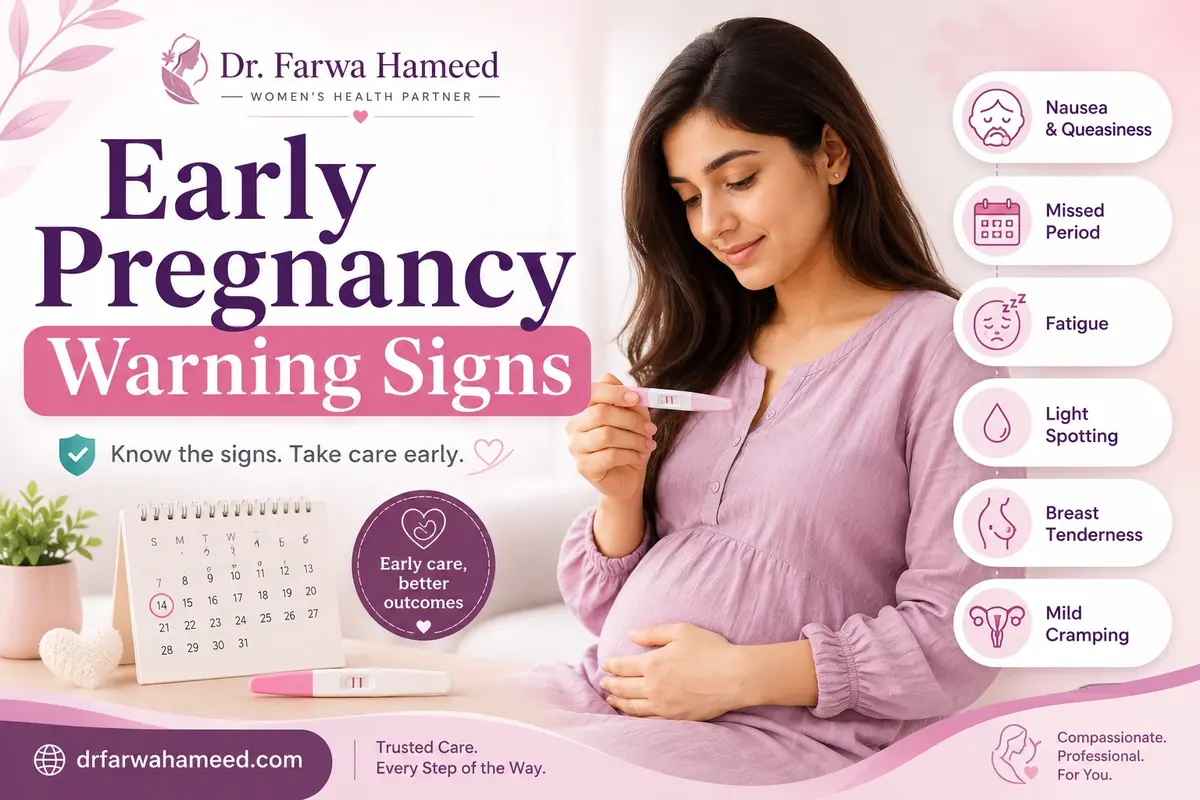
Early pregnancy comes with a long list of symptoms, and most of them are completely normal. Nausea, fatigue, sore breasts, frequent urination. Your body is adjusting to something it has never done before, and that adjustment is not quiet. But some symptoms are not just discomfort. Some are warning signs that something needs to be checked right away.
The problem is that most women cannot tell the difference on their own, especially in a first pregnancy. So they either panic over things that are fine, or they wait too long on things that are not. Both are avoidable.
If you are in Islamabad and want clear, reliable guidance from the start, consulting a best female gynecologist in Islamabad before symptoms get confusing is the better approach.
This article explains what to expect, what to watch for, and exactly when something in early pregnancy needs medical attention rather than a Google search.
Early Pregnancy Symptoms: What Is Actually Normal
Before covering warning signs, it helps to know what normal actually looks like. The first trimester brings physical changes that can feel alarming but are not.
Nausea and vomiting. Morning sickness is one of the most common early pregnancy symptoms. It usually starts around week 6 and improves by week 12 to 14 for most women. Nausea that is manageable, even if unpleasant, is expected. What is not normal is nausea so severe you cannot keep any food or fluids down for more than 24 hours, as that can lead to dehydration and needs treatment.
Fatigue. Feeling exhausted in the first trimester is real. Rising progesterone levels slow your body down. Rest when you can.
Breast tenderness. Breasts can feel sore, heavy, or unusually sensitive from as early as 1 to 2 weeks after conception. This typically eases after the first trimester.
Light cramping. Mild cramps in the first few weeks can be caused by implantation or the uterus beginning to grow. They often feel similar to period cramps and come and go. Cramps that are severe, persistent, or one-sided are a different situation, covered below.
Frequent urination. Your kidneys are working harder and blood flow to the pelvic region increases. Needing to urinate more often is expected throughout pregnancy.
Light spotting. A small amount of pinkish or brownish discharge in the first 1 to 2 weeks after conception can be implantation bleeding. This is not a period, and it is not heavy. Light spotting can also occur around the time a period would have been due. Many women with completely healthy pregnancies experience this.
Food aversions and heightened smell. Sudden sensitivity to smells or specific food aversions are very common in the first trimester and are linked to hormonal changes.
Bloating and constipation. Progesterone slows digestion. Bloating and irregular bowel habits are normal and typically manageable with diet adjustments.
If you are unsure whether a symptom you are experiencing falls into normal range, especially if you have had a previous pregnancy complication or a history of conditions like PCOS or endometriosis, a visit to a woman health care clinic gives you a proper baseline assessment rather than guesswork.
First Week Pregnancy Symptoms: What Women Often Notice First
Not everyone realizes they are pregnant in the first week. Some women do not test until a missed period. But for those who test early or who are tracking closely, the first week pregnancy symptoms are usually subtle.
The earliest signs before a missed period include:
- A slight dip in basal body temperature followed by a sustained rise
- Light spotting or pinkish discharge around day 6 to 12 after ovulation (implantation)
- Mild bloating or a feeling of fullness
- Breast heaviness or sensitivity
- Unusual fatigue that does not match your normal activity level
- A heightened sense of smell
None of these alone confirm pregnancy. A home pregnancy test after a missed period, or a blood beta-hCG test from your doctor, is the only way to confirm.
When to take a pregnancy test at home. Most home pregnancy test strips can detect hCG from the day of a missed period. Testing too early gives unreliable results. If your first test is negative but your period still does not arrive, test again 3 to 5 days later.
Symptoms of Pregnancy in the First Week and First Month: The Timeline
Understanding when different symptoms typically appear helps women know whether what they are experiencing fits the expected pattern.
| Time | What Often Happens |
|---|---|
| Week 1 to 2 | Ovulation, possible implantation spotting, no visible symptoms yet |
| Week 3 to 4 | Implantation complete, hCG begins rising, possible mild fatigue and breast changes |
| Week 5 to 6 | Nausea typically starts, urination frequency increases, missed period |
| Week 7 to 8 | Nausea may peak, fatigue increases, first ultrasound usually scheduled |
| Week 9 to 12 | Symptoms may plateau or ease slightly, miscarriage risk decreases significantly after week 10 |
Symptoms of pregnancy in the first month vary considerably from woman to woman. Some feel strongly pregnant from week 5. Others feel almost nothing and worry that the lack of symptoms means something is wrong. Both are within normal range.
Early Signs of Pregnancy Before a Missed Period
Many women want to know if they can detect pregnancy before their period is due. The honest answer: sometimes yes, but not reliably.
Early signs of pregnancy before a missed period that some women notice include:
- Implantation cramping or spotting (around 6 to 12 days after ovulation)
- A feeling that their breasts are unusually full or tender
- Mild nausea in the days just before a missed period
- Unusual fatigue or a sense of heaviness
- Increased vaginal discharge that is white, thick, and odorless
These overlap heavily with premenstrual symptoms, which is why it is genuinely difficult to tell from symptoms alone. A pregnancy test is the only reliable way to know.
White Discharge in Early Pregnancy: When Is It Normal?
White discharge during early pregnancy is one of the more common concerns. The increase in vaginal discharge is normal. It is caused by higher estrogen levels and increased blood flow to the vaginal walls.
Normal pregnancy discharge is:
- White or clear
- Mild or no odor
- Non-irritating
Discharge that needs attention includes anything that is yellow or green, has a strong or unusual smell, causes itching or burning, or has the texture of cottage cheese. These can indicate a bacterial or yeast infection, both of which are more common during pregnancy and both of which are treatable.
Warning Signs in Early Pregnancy That Need Prompt Attention
This is the core of what women need to know. The following symptoms in early pregnancy are not things to monitor at home and wait on. They need a doctor.
Heavy Vaginal Bleeding
There is a clear difference between light spotting and heavy bleeding. Heavy bleeding means soaking a pad, passing clots, or bleeding that looks and feels like a heavy period or more. This can indicate:
- Threatened or complete miscarriage
- Ectopic pregnancy (if combined with pain)
- Subchorionic hemorrhage (a blood clot between the placenta and uterine wall)
Some women with heavy bleeding in early pregnancy go on to have healthy pregnancies, but the cause needs to be confirmed with an ultrasound.
Severe or One-Sided Abdominal Pain
Mild cramping is expected. Pain that is sharp, severe, persistent, or localized to one side of the lower abdomen is not. One-sided pain combined with a positive pregnancy test is a warning sign for ectopic pregnancy until proven otherwise.
An ectopic pregnancy is one that has implanted outside the uterus, most often in a fallopian tube. It cannot proceed to a healthy birth, and if the tube ruptures, it becomes a medical emergency. Symptoms include sharp one-sided pain, shoulder tip pain (caused by blood irritating the diaphragm), dizziness, and sometimes heavy bleeding.
Do not wait on one-sided pain in early pregnancy. This needs same-day assessment.
Shoulder Tip Pain
Pain at the very tip of the shoulder, especially when lying down, can indicate internal bleeding from a ruptured ectopic pregnancy. This is an emergency. Call for help immediately.
Fainting or Severe Dizziness
Mild lightheadedness can happen in early pregnancy, especially if you are not eating regularly or are dehydrated. But sudden fainting or severe dizziness, particularly with pain or bleeding, can indicate significant blood loss and needs urgent assessment.
Fever Above 38°C
Fever during pregnancy, particularly in the first trimester, carries more risk than fever outside pregnancy. It can indicate infection, including urinary tract infections (which are more common in pregnancy), or, in more serious cases, sepsis. Fever should not be dismissed or treated at home with paracetamol alone without a medical evaluation.
Severe Nausea and Vomiting: Hyperemesis Gravidarum
Regular morning sickness is uncomfortable but manageable. Hyperemesis gravidarum is severe vomiting that leads to weight loss, dehydration, and the inability to keep any food or fluids down. It typically begins between weeks 4 and 6 and can require IV fluids and medication. If you cannot hold down water for 24 hours, this needs medical management, not more ginger tea.
Painful or Burning Urination
Urinary tract infections are common in pregnancy because of hormonal and physical changes to the urinary tract. They need treatment with pregnancy-safe antibiotics because an untreated UTI in pregnancy can progress to a kidney infection, which carries risks for both mother and baby.
Stomach Pain in Early Pregnancy: What It Could Mean
Stomach pain in early pregnancy covers a range of causes, from completely benign to serious.
Round ligament pain. As the uterus expands, the ligaments that support it stretch. This can cause a sharp or pulling sensation on one or both sides of the lower abdomen, often triggered by sudden movement. It is harmless.
Gas and bloating. Progesterone slows the digestive system. Gas pain can feel surprisingly sharp and can be mistaken for something more serious.
Constipation. Harder stools and less frequent bowel movements are common, and constipation can cause genuine abdominal discomfort.
Miscarriage. Cramping with or without bleeding in the first trimester can be a sign of miscarriage. If cramping is getting worse rather than better, or is accompanied by any bleeding, it needs to be assessed.
Ectopic pregnancy. As noted above, one-sided lower abdominal pain is not to be waited on.
If you are experiencing stomach pain in early pregnancy and are uncertain, especially if it is worsening or accompanied by any other symptoms, contact your doctor. The top 10 gynecologist in islamabad list can help you find the right specialist quickly if you do not already have a gynecologist.
Leg Pain in Early Pregnancy
Leg pain during early pregnancy, particularly in the calves, is worth mentioning to your doctor. While leg cramps are common (especially at night), persistent or swelling-associated pain in one leg can, in rare cases, indicate deep vein thrombosis (DVT). Pregnancy increases clotting factors, making DVT more of a possibility than it would be otherwise.
Leg cramps that come and go, particularly at night, are usually due to electrolyte imbalances or circulatory changes and are not dangerous. Calf pain that is constant, accompanied by redness, warmth, or swelling should be reported.
Vaginal Pain During Pregnancy
Vaginal pressure or discomfort is common in pregnancy, especially as the uterus grows and puts pressure on surrounding structures. Pelvic girdle pain and symphysis pubis dysfunction are recognized conditions in pregnancy that cause significant pelvic and vaginal area pain.
Sharp vaginal pain in early pregnancy, however, especially if accompanied by discharge or bleeding, should be checked. This can sometimes indicate cervical irritation, infection, or in rarer cases, cervical incompetence.
Back Pain in Early Pregnancy
Back pain in early pregnancy is common and usually related to ligament relaxation caused by the hormone relaxin. Most women experience some degree of lower back discomfort from the first trimester.
Severe back pain, particularly if it is in the upper back or kidney area and accompanied by fever, can indicate a kidney infection. Lower back pain with cramping and bleeding can be associated with miscarriage. These combinations need attention.
Shortness of Breath During Pregnancy
Mild breathlessness in early pregnancy is linked to increased respiratory drive and progesterone effects. Your body needs more oxygen, and breathing adapts to that. This typically worsens in the third trimester as the uterus expands.
Sudden or severe breathlessness, chest pain, or palpitations are not normal at any stage of pregnancy and need urgent assessment.
When to See a Doctor During Early Pregnancy
To make this practical, here is a clear breakdown:
Same day or emergency:
- Heavy bleeding (soaking a pad or passing clots)
- Severe one-sided abdominal pain
- Shoulder tip pain
- Fainting
- Severe dizziness with pain or bleeding
- Difficulty breathing with chest pain
Within 24 to 48 hours:
- Fever above 38°C
- Any bleeding, even light, if accompanied by pain
- Inability to keep fluids down for more than 24 hours
- Burning or painful urination
- Persistent vomiting and weight loss
At your next scheduled appointment or within a few days:
- Light spotting with no pain
- Mild cramping with no bleeding
- Questions about normal symptoms
- Any new symptom you are unsure about
The Role of Early Antenatal Care
A lot of anxiety in early pregnancy comes from uncertainty. Women do not always know what is normal, and they are not always sure when to act on something. Early antenatal care solves most of this.
Your first visit gives you a baseline. Blood tests, an early scan at around 6 to 8 weeks, a review of your medical history, and guidance on folic acid, vitamin D, and what to avoid in the first trimester. It also means you have a point of contact when a symptom worries you, rather than searching online at 2 AM.
For women with any history of previous miscarriage, ectopic pregnancy, PCOS, thyroid conditions, or other health factors, early booking is even more important. Certain conditions need to be monitored or managed from the start of pregnancy.
Women going through other stages of reproductive health, including irregular cycles, perimenopausal changes, or fertility concerns, may find that a menopause expert doctor who also manages broader reproductive health can provide continuity of care across different life stages.
Signs of Miscarriage in Early Pregnancy
Miscarriage occurs in roughly 10 to 20% of confirmed pregnancies, with the majority happening before week 12. This is a difficult subject but an important one, because many women are not sure what miscarriage looks and feels like.
Common signs include:
- Vaginal bleeding, ranging from light spotting to heavy bleeding with clots
- Cramping that feels stronger than normal period pain
- Passing tissue or clots from the vagina
- A sudden reduction in pregnancy symptoms (though this alone is not conclusive)
A "missed miscarriage," where the embryo has stopped developing but the body has not yet expelled it, may have no symptoms at all and is often discovered at a routine scan.
If any of the above symptoms occur, an ultrasound is needed to assess the pregnancy. This does not always mean the pregnancy has been lost. Subchorionic hemorrhage, for example, can cause significant bleeding without miscarriage.
Pregnancy After Previous Pregnancy Loss
Women who have experienced miscarriage or ectopic pregnancy often experience significantly more anxiety in subsequent pregnancies. Every cramp, every moment of reduced nausea, every absence of symptoms feels loaded. This is understandable.
If this applies to you, early pregnancy care with a doctor who knows your history is worth prioritizing. Some providers offer early "reassurance scans" at 6 to 7 weeks for women with a history of pregnancy loss, which can provide a great deal of reassurance if a heartbeat is detected.