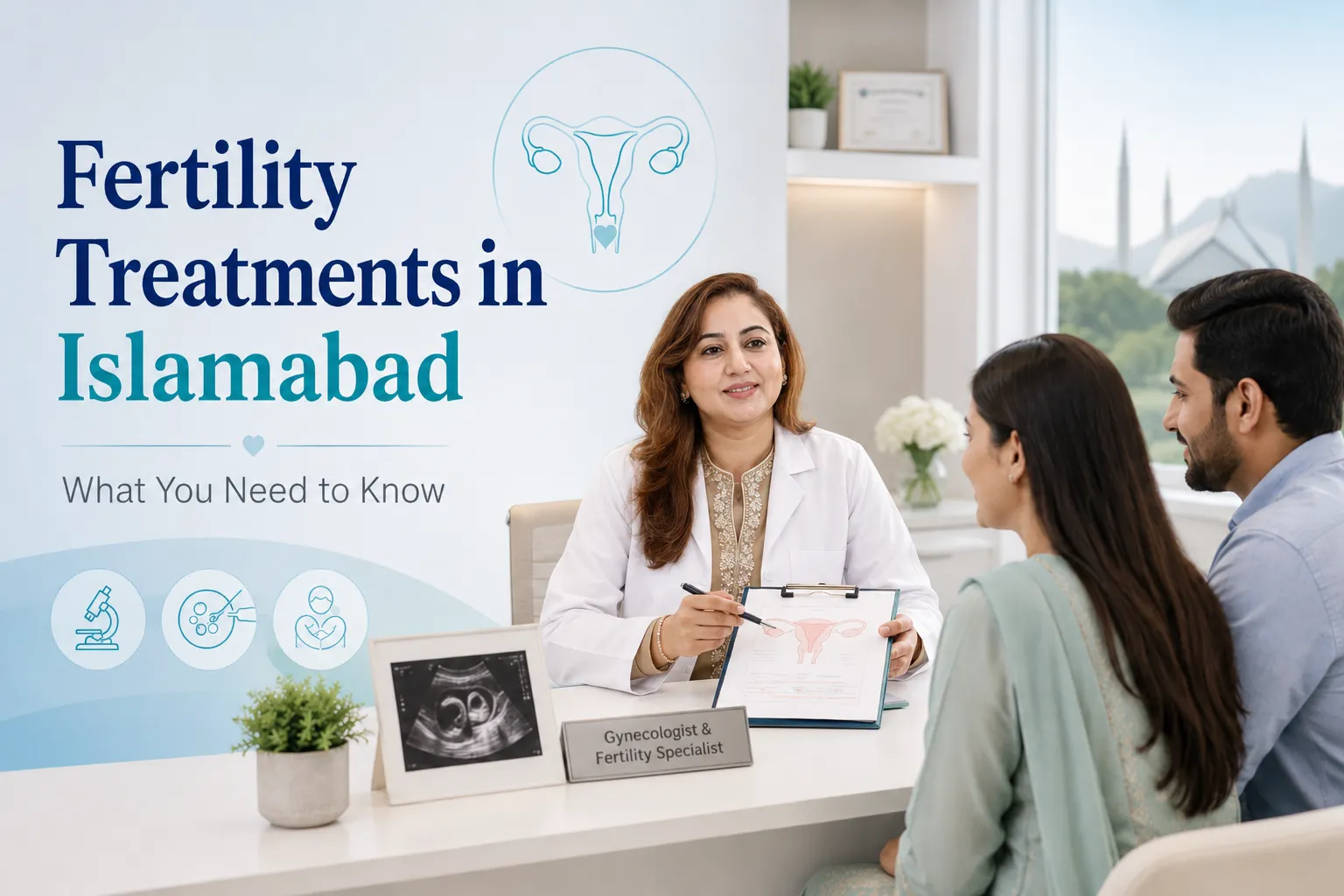
Struggling to conceive is more common than most couples in Islamabad realize. The problem is, it rarely gets talked about openly. Between social pressure and a shortage of clear, reliable information, many people spend months, sometimes years, trying to figure out their next step on their own.
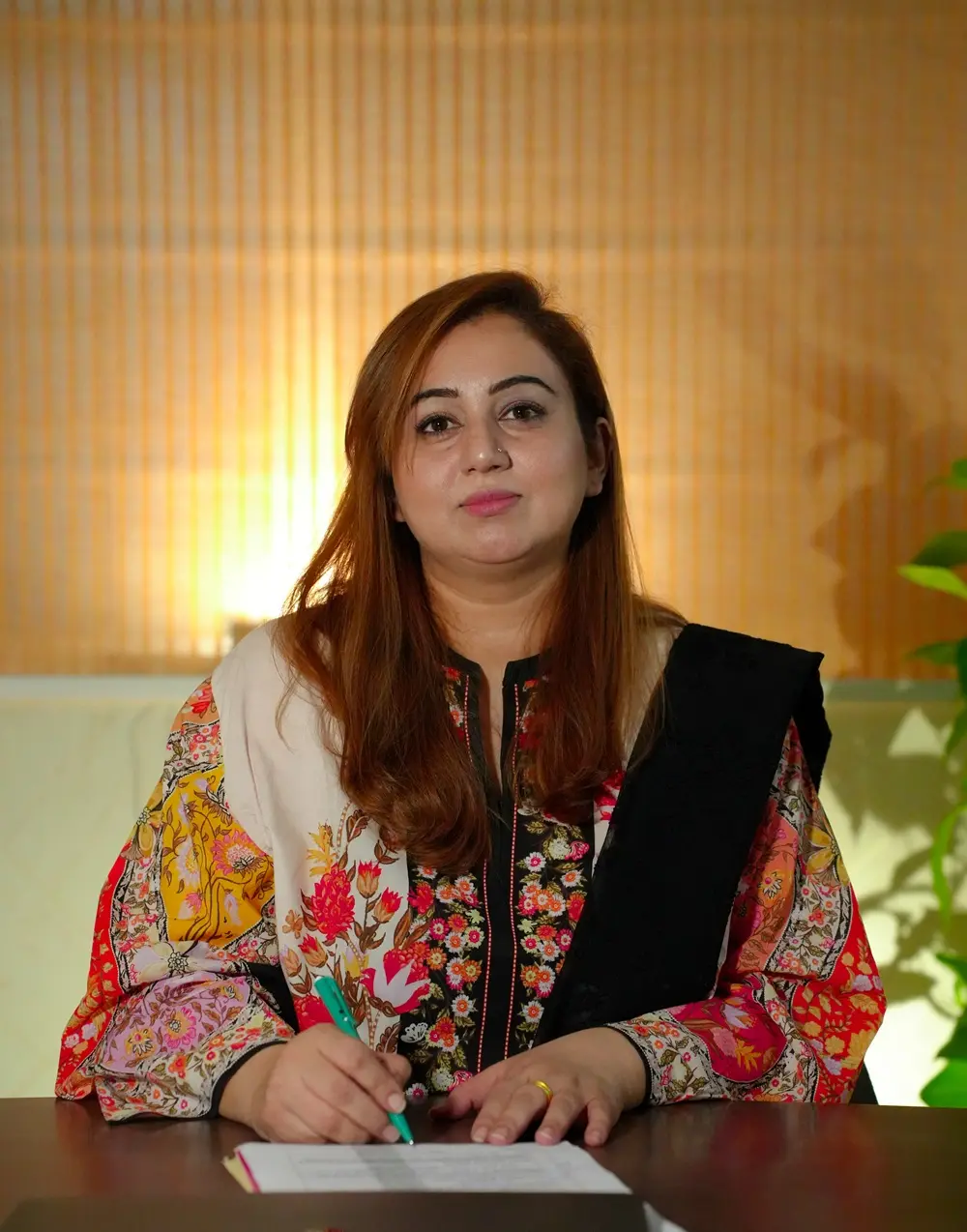
Dr. Farwa Hameed is an MRCOG-UK certified gynecologist and infertility specialist practicing in Islamabad, and this guide covers the fertility treatments she works with, who each one is suited for, and what a realistic path forward looks like.
When Should You Actually Consider Fertility Treatment?
The general rule is straightforward: if you are under 35 and have been trying for 12 months without success, it is time to get checked. If you are 35 or older, that window narrows to 6 months. And if there is already a known issue, like irregular cycles, a PCOS diagnosis, or a previous pregnancy loss, waiting a full year does not make sense.
A few situations where earlier evaluation is the right call:
- Cycles that are irregular, very long, or absent altogether.
- A history of two or more miscarriages.
- Endometriosis or a prior pelvic infection.
- The male partner has previously had a fertility test with abnormal results.
The first step is not treatment. It is an evaluation to understand what is actually going on, which makes everything after it far more focused.
For a detailed look at the timeline and what the assessment involves, fertility evaluation for couples explains exactly when and how to get started.
Not sure when to start fertility treatment?
If you have been trying to conceive and feel unsure about the next step, a fertility consultation can help you understand whether treatment is needed or whether simple evaluation should come first.
Ask About Fertility TreatmentCommon Causes of Infertility: What the Tests Usually Find
Before deciding on a treatment, the clinic needs to understand the cause. In Pakistan, ovulation disorders and PCOS are among the most frequent findings in women. But male factor infertility is involved in roughly 40 to 50 percent of cases globally, and Islamabad is no exception.
Female Causes
- PCOS (polycystic ovary syndrome): affects ovulation directly and is the most common hormonal disorder in women of reproductive age.
- Blocked or damaged fallopian tubes: often from a past pelvic infection or endometriosis.
- Uterine abnormalities: fibroids, polyps, or a structural issue that affects implantation.
- Diminished ovarian reserve: fewer eggs than expected for the patient's age.
PCOS deserves a section of its own later in this post. For a full breakdown, PCOS treatment in Islamabad covers the condition and how it is managed in detail.
Male Causes
Low sperm count, poor motility, or abnormal sperm shape are the main findings. Hormonal imbalances, varicocele, and prior infections can also play a role. A semen analysis is a simple, non-invasive test and is usually one of the first things ordered during the evaluation.
Fertility Treatments Available in Islamabad
The treatments below are arranged roughly in order of complexity. Most couples do not start with IVF. The approach is to begin with the least invasive option that fits the diagnosis, and move up from there if needed.
Ovulation Induction
For women who are not ovulating regularly, or not ovulating at all, the first step is medication to trigger ovulation. Clomiphene and letrozole are the two most commonly used oral medications. Both are taken at the start of the cycle and monitored with ultrasound to confirm a follicle is developing. When the follicle reaches the right size, a trigger injection brings on ovulation.
This approach works well for women with PCOS or irregular cycles where the underlying anatomy is otherwise normal. It is done in the clinic, does not require surgery, and is often the starting point before considering IUI.
Intrauterine Insemination (IUI)
IUI involves placing a prepared sperm sample directly into the uterus around the time of ovulation, shortening the distance sperm need to travel and increasing the chances of fertilization. It is typically done alongside ovulation induction so the timing is controlled.
It suits couples where the tubes are open, sperm count is adequate but lower than ideal, or where unexplained infertility has been the diagnosis for some time. Each IUI cycle takes about two weeks from start to finish. Success rates per cycle vary, but most specialists recommend giving it three to four cycles before reassessing.
Dr. Farwa has a video explaining the procedure in plain terms. Watch what IUI involves for a straightforward walkthrough.
In Vitro Fertilization (IVF)
IVF is the next step when IUI has not worked, when both tubes are blocked, when sperm count is significantly low, or when age-related egg reserve is a concern. Eggs are retrieved from the ovaries, fertilized in a lab, and the resulting embryo is transferred back into the uterus a few days later.
IVF is available in Islamabad at specialized fertility centers. Dr. Farwa works with couples through the assessment and counseling phase and can provide appropriate referrals to IVF facilities where needed. The process typically takes four to six weeks per cycle, and success rates depend heavily on the woman's age and the reason for infertility.
Surgical Options
Some cases are best addressed with surgery before or instead of assisted reproduction. Laparoscopy can treat endometriosis, clear blocked tubes, or remove ovarian cysts. Hysteroscopy addresses uterine polyps and fibroids from inside the uterus. Both are day procedures done under anesthesia.
In some cases, surgery alone is enough to restore natural conception. In others, it improves the chances of IUI or IVF working.
Which fertility treatment is right for you?
The right option depends on your age, cycle pattern, test results, semen analysis, and how long you have been trying. A proper evaluation helps avoid guessing and choosing the wrong treatment too early.
Book a ConsultationWhat Happens at Your First Fertility Consultation?
Patients often put off the first appointment because they are not sure what it involves. The reality is fairly straightforward.
The consultation starts with a detailed history: cycle regularity, previous pregnancies, any known conditions, and how long you have been trying. From there, bloodwork covers hormones including FSH, LH, estradiol, AMH, which gives a measure of ovarian reserve, and thyroid function. A pelvic ultrasound checks follicle count, uterine structure, and any visible issues.
For the male partner, a semen analysis is arranged separately. Results from both sides are reviewed together before any treatment is discussed.
If you have not been to a gynecology clinic before and want to know what the experience is like in general, what to expect at your first gynecology visit gives a clear picture.
How PCOS Affects Fertility and What Can Actually Be Done
PCOS is the most common cause of ovulation-related infertility in Pakistan. The ovaries produce follicles but they do not mature and release an egg consistently, which makes natural conception difficult and cycle timing unpredictable.
The approach to fertility in women with PCOS starts with lifestyle changes. Weight loss of even 5 to 10 percent in women who are overweight can restore regular ovulation on its own. Beyond that, metformin is sometimes used to improve insulin sensitivity. If ovulation still does not happen reliably, ovulation induction with letrozole is the next move.
For women with PCOS whose tubes are open and whose partner's semen analysis is normal, IUI with ovulation induction gives good results. IVF is reserved for cases where simpler options have not worked or where there are additional factors at play.
Dr. Farwa has also covered PCOS and subfertility in a video that patients have found genuinely useful. You can watch subfertility causes and treatment for more detail on how PCOS connects to fertility issues.
What to Realistically Expect: Cost, Time, and Emotional Load
Fertility treatment in Islamabad is more accessible than most people assume, especially the earlier steps like ovulation induction and IUI. IVF involves higher costs and is done at specialized centers. The actual figures vary based on the clinic and the specific protocol, so it is worth discussing this directly during the consultation.
On timing: ovulation induction and IUI each take one cycle, roughly four weeks. IVF preparation, retrieval, and transfer take four to six weeks. Most people do not get a result after one cycle. Three to four cycles is a common treatment course before decisions about escalating are made.
The emotional side of fertility treatment is real and often underestimated. The uncertainty between each stage, particularly the two-week wait after IVF transfer, is hard. Having a doctor who explains each step clearly and answers questions without rushing the appointment makes a meaningful difference.
Dr. Farwa's clinic operates in DHA Islamabad for patients in that area. To check availability and book, visit the DHA Islamabad gynecologist.
Why an MRCOG-UK Specialist Makes a Difference
The MRCOG, Membership of the Royal College of Obstetricians and Gynaecologists, is a UK postgraduate qualification that requires passing structured written and clinical exams, along with supervised training in obstetrics and gynecology. It is widely recognized as a mark of advanced clinical training in the field.
Dr. Farwa Hameed holds the MRCOG-UK and has clinical experience across gynecology, obstetrics, and fertility care. She has appeared on PTV to discuss women's health topics, which reflects the trust placed in her expertise beyond the clinic setting.
What this means in practice: the advice you receive is grounded in evidence-based protocols, not generic. When a treatment is recommended, the reasoning behind it is explained. When a referral is needed, it is made to the right place.
Book a Fertility Consultation in Islamabad
If you have been trying to conceive without success, or if you have a condition like PCOS that you know affects your fertility, the right move is to get a proper evaluation before spending more time guessing. An assessment takes one appointment and gives you a clear picture of where things stand.
To book or ask about availability, the contact page has everything you need. Consultations are available across multiple locations in Islamabad.
Medical note: This article is for general awareness and does not replace a personal consultation. Fertility testing and treatment should always be planned after reviewing both partners’ medical history and reports.