Many women spend years not knowing what is happening to their bodies. Their periods come and go whenever they feel like it. Their skin breaks out even at 28. They gain weight despite not changing what they eat. And somewhere along the way, a doctor mentions PCOS, almost as an afterthought, without really explaining what it means or what to do next.
This post is for those women. It covers what PCOS actually is, how to know if you have it, how a proper diagnosis is made, and what treatment options are available, including what works and what does not.
What Is PCOS?
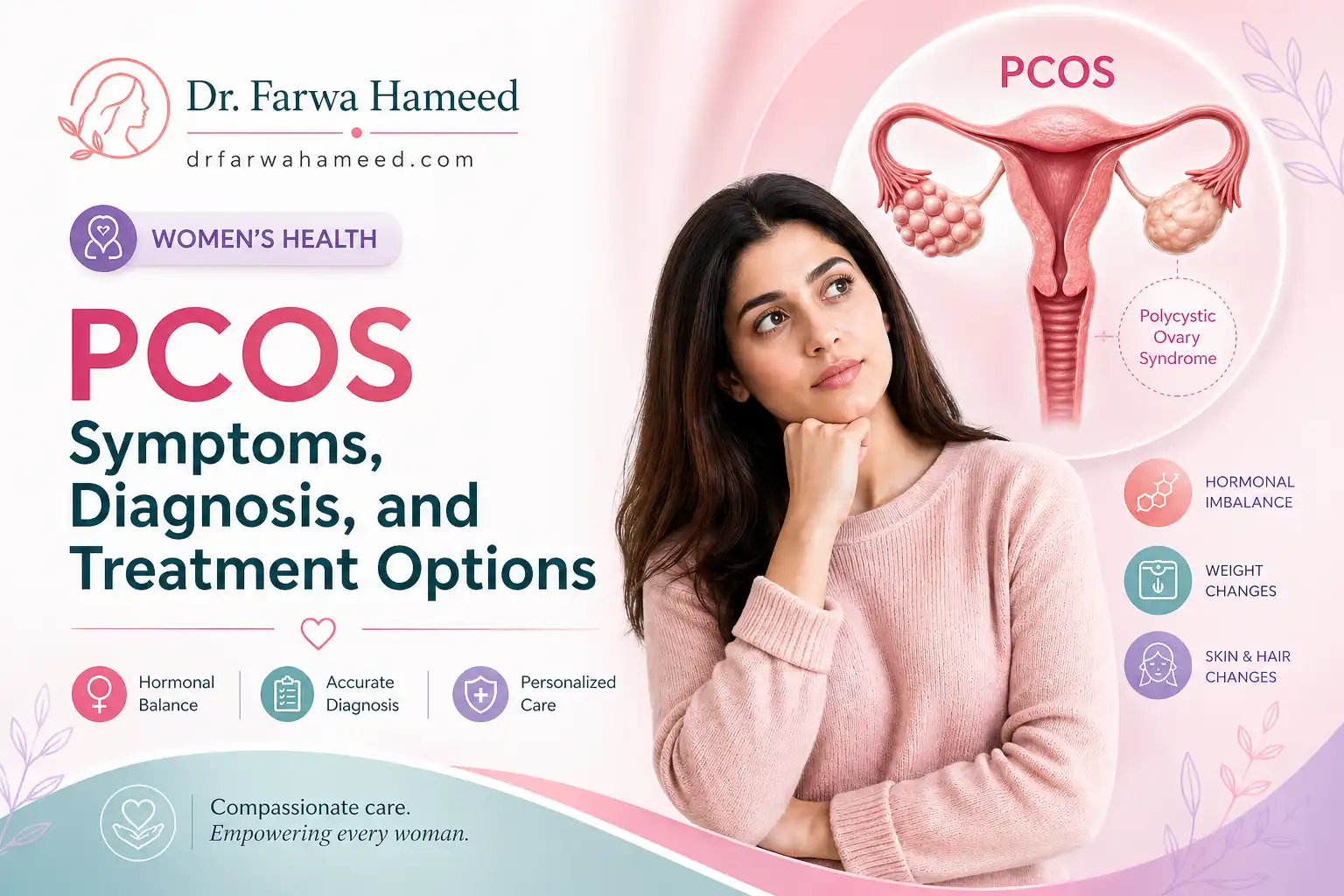
PCOS is a hormonal disorder, not simply a cyst problem. The name is genuinely misleading. Many women with PCOS have no visible cysts at all on ultrasound, and some women who do have cysts do not have PCOS. The condition is about how your hormones are behaving, not about what shows up on a scan.
The ovaries of a woman with PCOS tend to produce more androgens, which are male-type hormones, than normal. This disrupts ovulation. When ovulation does not happen regularly, periods become unpredictable, and a range of other symptoms follow.
Globally, PCOS affects roughly 8 to 13% of women of reproductive age. In South Asia, including Pakistan, rates tend to be higher, and the condition often presents with stronger metabolic features like insulin resistance and weight gain around the abdomen. In my clinic, I regularly see patients who have been told they "just have irregular periods" for years before anyone checks their hormones properly.
Think your symptoms may be PCOS?
Irregular periods, acne, facial hair, weight gain, or dark skin patches are worth checking properly. A consultation can help confirm whether PCOS is the cause or if another hormonal issue is involved.
Book a PCOS ConsultationPCOS Symptoms: What to Watch For
PCOS does not look the same in every woman. One patient may have regular periods but severe acne and facial hair. Another may have no skin symptoms at all but has not had a period in four months. This variation is exactly why PCOS gets missed so often.
These are the symptoms worth discussing with your doctor.
Irregular or Missed Periods
This is the most reported complaint. Cycles that come every 45 days, or twice in one month, or not at all for stretches of time, often point to a disruption in ovulation. If your cycle keeps changing without a clear reason, this guide on irregular periods and when to seek help can help you understand when it is time to see a gynecologist.
Excess Hair Growth
Excess hair growth, also called hirsutism, means hair on the chin, upper lip, chest, or lower abdomen that is dark and coarse, not fine and light. This is a sign of raised androgen levels. It is not the same as normal body hair.
Acne and Oily Skin
PCOS-related acne tends to sit along the jawline and chin and does not respond well to standard skincare. If your acne persists past your teenage years and keeps coming back in the same areas, it is worth investigating hormonally.
Thinning Hair on the Scalp
Some women notice hair coming out in larger amounts in the shower or a widening parting on the scalp. This is different from normal daily shedding.
Weight Gain Around the Abdomen
Not all women with PCOS are overweight, but many find that weight collects around the stomach regardless of diet changes. This is often linked to insulin resistance.
Dark Patches of Skin
These appear on the neck, underarms, or inner thighs and are called acanthosis nigricans. They are a visible sign that insulin resistance may be present.
Mood Changes
Anxiety and low mood are more common in women with PCOS than the general population. This connection does not get talked about enough, but it matters clinically.
If you recognize several of these, do not wait. These symptoms together are a pattern worth investigating, not dismissing.
How Is PCOS Diagnosed?
This is where many women get a partial answer and walk away confused. An ultrasound alone is not enough to diagnose or rule out PCOS. Diagnosis follows the Rotterdam Criteria, which is the internationally accepted standard.
The Rotterdam Criteria requires that a patient meet at least two of these three conditions:
- Irregular or absent ovulation, shown by irregular periods or confirmed via progesterone testing
- Clinical or biochemical signs of high androgens, such as excess hair, acne, or elevated testosterone on a blood test
- Polycystic-appearing ovaries on ultrasound, meaning 12 or more follicles on one ovary or increased ovarian volume
So a woman with irregular periods and elevated testosterone but a normal-looking ultrasound can still be diagnosed with PCOS. This is why the full hormonal workup matters.
Blood tests I typically order include LH and FSH ratio, total and free testosterone, DHEAS, fasting insulin and glucose, thyroid function including TSH and free T4, and prolactin. Thyroid disorders and high prolactin levels can cause irregular periods and must be ruled out before confirming a PCOS diagnosis.
A pelvic ultrasound is part of the picture, but it is one piece of a larger clinical assessment. If your doctor only ordered an ultrasound and told you everything looks fine, or confirmed PCOS based on the ultrasound alone without any blood tests, it may be worth getting a second opinion from a specialist.
If you are in Islamabad and have been getting inconsistent answers, consider consulting a gynecology clinic in Islamabad that works through the full diagnostic criteria before drawing conclusions.
Need proper PCOS testing?
If you were diagnosed only through ultrasound or told your reports are “normal” despite ongoing symptoms, a full hormonal review may give clearer answers.
Discuss Your ReportsPCOS Treatment Options
There is no single treatment that works for every woman with PCOS. What works depends on what is driving your symptoms and what your goals are: regulating your cycle, managing skin and hair symptoms, improving metabolic health, or conceiving.
Lifestyle Changes
This is always the starting point, and it is not just standard advice to tick a box. In women with insulin-resistant PCOS, which is common in Pakistani patients, even modest lifestyle changes produce measurable hormonal improvements.
A lower glycemic diet helps most: whole grains instead of refined flour, vegetables at every meal, less sugar in chai, less reliance on white rice and bread as meal bases. These are not radical changes, but they shift insulin levels over time, and that shift can restore ovulation in some women without any medication.
Regular moderate exercise, around 30 minutes five days a week, reduces insulin resistance independently of weight loss. And a body weight reduction of even 5 to 10% can trigger a return of regular periods in women who are overweight.
Medications
Combined oral contraceptives, also called COCPs, are prescribed to regulate periods and lower androgen levels. They reduce acne and slow excess hair growth over time. They are not a cure, but they manage symptoms effectively while the woman is taking them.
Metformin improves insulin sensitivity. It is often used alongside lifestyle changes in women with significant insulin resistance and can help regulate cycles in some patients.
Letrozole or clomiphene are used when fertility is the goal. These medications stimulate ovulation and are generally the first line of fertility treatment for women with PCOS. If pregnancy is your main concern, proper fertility treatment in Islamabad can help assess ovulation, hormones, and the right next step.
Spironolactone is sometimes added for women struggling with persistent hirsutism or acne despite other treatments. It blocks androgen receptors and reduces those effects on the skin and hair.
Treatment is not one-size-fits-all, and it often takes some adjustment. What works well for one patient may need modification for another.
Mental and Emotional Health
This is the part of PCOS care that most clinics underaddress. Living with unpredictable periods, visible hair changes, skin problems, and fertility uncertainty takes a toll. Anxiety and depression are genuinely more common in women with PCOS, and they deserve proper attention, not just a passing mention at the end of an appointment.
If your PCOS is affecting how you feel about yourself or causing significant stress, please bring this up with your doctor. It belongs in the conversation.
Long-Term Management
PCOS does not disappear, but it does not have to dominate your life either. Women who understand their condition and work with a doctor who takes it seriously tend to manage it well.
Long-term, your monitoring plan should include annual fasting glucose and insulin checks, blood pressure monitoring, and periodic hormonal review. PCOS raises the lifetime risk of type 2 diabetes and cardiovascular issues, so staying on top of these markers matters.
Most women with PCOS can conceive with appropriate support. The fertility picture is not hopeless, even if it feels that way after months of irregular cycles and no answers.
If you have been sitting with a PCOS diagnosis that nobody has properly explained, or with symptoms that have never been investigated, that is worth addressing. You deserve a clear plan, not just a prescription handed over without context. For location-based consultation, you can check the gynecologist locations in Islamabad and choose the clinic that is easier for you to visit.
Book a PCOS consultation in Islamabad
If your periods, skin, hair growth, weight, or fertility concerns may be linked to PCOS, Dr. Farwa Hameed can help you understand the cause and plan the next step.